
Repair instructions
How to Properly Recharge a Car Battery?
When your car won’t start and the culprit is a dead battery, knowing how to safely recharge it can save you time, money, and frustration. Whether you’re at home with a battery charger or on the road with jumper cables, this guide breaks it down like we would in the shop.
🧰 Before You Start: Safety and Inspection
Safety First:
- Always wear eye protection and rubber gloves when working with batteries.
- Battery acid is corrosive, and hydrogen gas emitted during charging can be explosive.
Initial Inspection:
- Clean the terminals to remove any corrosion or sulfur buildup.
- Inspect for damage: If your battery is leaking or emitting smoke, do not attempt to charge it, replace it immediately.
Tools You May Need:
- Safety goggles & gloves
- Baking soda, water, and cloth
- Battery terminal cleaner and brush
- Digital voltmeter (DVOM)
- Heavy-duty paper towels
⚙️ Why Car Batteries Die
A dead battery is often caused by:
- Leaving headlights or interior lights on
- Using electronics while the engine is off
- Failing charging system (e.g., bad alternator, loose belt, corroded wires)
Most car batteries are designed to last 4 to 6 years. If yours is in decent shape, a proper recharge can bring it back to life.
🔌 Charging a Car Battery with a Charger
If you’re charging the battery without driving the car, here’s how to do it right.
Step 1: Prep the Battery
- Disconnect and clean the battery cables and terminals.
- For side-post batteries (common on GM vehicles), inspect bolts and replace if needed.
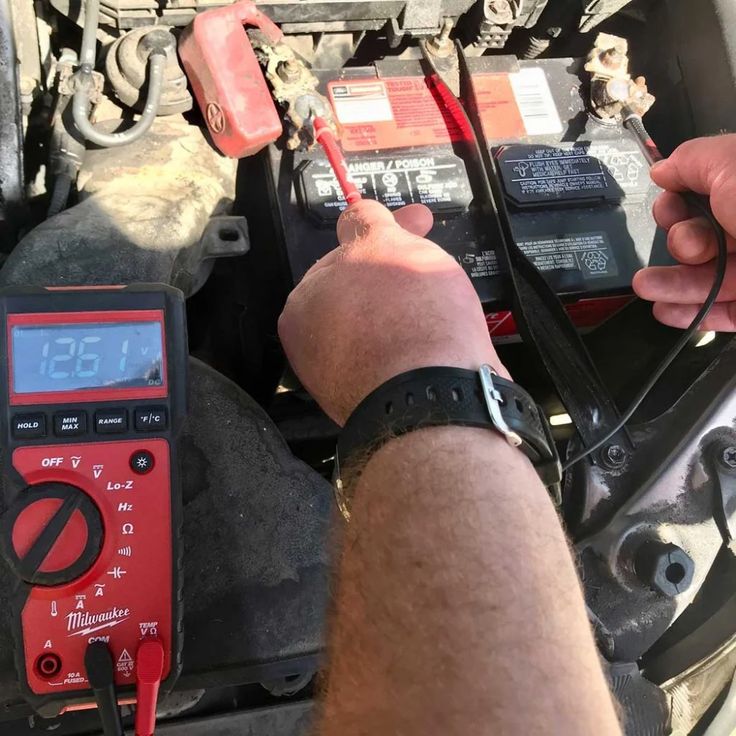
Step 2: Vent the Battery
- Remove the cell caps to allow gas to escape (if applicable).
Step 3: Connect the Charger
- Red clamp → Positive terminal (+)
- Black clamp → Negative terminal (–)
Step 4: Set and Monitor
- Select the proper charge mode: trickle for maintenance, fast charge for quick top-up.
- If your charger doesn’t have a voltmeter, connect a DVOM. If voltage exceeds 15.5V quickly, the battery may be sulfated and should be replaced.
⚠️ AGM Batteries Warning:
Do not fast-charge an AGM battery it can damage the internal structure.
🚗 How to Jump-Start a Car
Stuck on the road with no charger? Use jumper cables and another vehicle:
Step-by-Step Jump-Start:
- Turn both engines off and clean battery terminals if needed.
- Connect jumper cables in this order:
- Red clamp to dead battery positive
- Red clamp to good battery positive
- Black clamp to good battery negative
- Black clamp to metal ground (not the dead battery’s negative terminal)
- Start the donor vehicle, let it run a few minutes.
- Start your vehicle. If successful, let it run at least 10 minutes.
- Remove cables in reverse order.
Pro Tip:
If your car dies after removing the cables, your alternator may be failing.
⏱️ How Long Does It Take to Charge a Car Battery?
- Driving with a good alternator: ~30 minutes
- Standard charger: 4–8 hours
- Trickle charger: 24+ hours
- Fast charging (EVs): As fast as 30 minutes
Important: Driving is more effective than idling when recharging a battery.
🔋 Choosing the Right Battery Charger
Not all chargers are the same. Here’s a breakdown:
| Charger Type | Best For | Notes |
|---|---|---|
| Manual Charger | Quick charges, simple use | Must be monitored—no auto shutoff |
| Automatic Charger | Maintenance, daily use | Shuts off automatically |
| Trickle Charger | Long-term storage | Keeps battery topped off without overcharge |
| Solar Charger | Off-grid or remote use | Use with a charge controller |
✅ Final Tips from the Shop
- Read the charger’s manual thoroughly before use.
- Always follow proper connection order when jump-starting.
- Don’t ignore signs of a failing alternator we see this often in batteries that won’t hold a charge.
Still having battery issues? It might be time for a full battery test or replacement. Stop by our shop and we’ll get you powered up and back on the road safely.
